
Getting Hired
A place for caregivers, PWD, & veterans to share experiences and questions about disability in the workplace

A place for caregivers, PWD, & veterans to share experiences and questions about disability in the workplace
Does it ever happen that the background check process takes too long and the company decides to pull back their job offer? And your past 10 months of freelance/self-employment can't be verified because you didn't create an LLC the minute you began it? I'm SURE I'm overthinking it and I'm just anxious to start working. I just appreciate your encouragement if you have any!

So many factors can play into a background check taking longer than expected. If it's been 2-3 business days past the time they said you should hear back on it, you can always follow up and make sure that's the only thing holding up the process at this point.
Also, you don't have to have an LLC formally registered in order to have your freelance work validated! As long as you're not unlawfully engaging in any business practice(s) as a self-employed person and your responsibilities to Uncle Sam are satisfied, you don't necessarily need to go through the LLC process (that being said with zero information about what you do, there are always exceptions to the general rule).

Hi Adrienne,
I hope this helps. For my current job, they were unable to verify my employment done as a contractor.
I was also worried because it was taking longer than usual to get my background check back (and trust me, I am otherwise VERY boring).
Well, it turns out that I had a typo when I filled out the form for the staffing agency that controlled the contact and the email I gave them didn't work because my contact had left.
They didn't 'fail' me, or whatever you would call it. They simply contacted me, told me the information they were unable to verify and asked me to contact them.
I sent in my pay stubs for the contract work, apologized for the typo and still got the job.

The last few weeks I've seen limited engagement except for a few hot topics. Otherwise, it's the same information asked or posted.
I joined to network and expand my professional knowledge. I'll give it another few weeks as maybe it's slow as members settle in for the new year or sadly, maybe it's not as active as last year. It's such a great platform that I hope it's only a slow start to 2022.

Has anyone tried asking their company for items that they had in the office like a standing desk or ergonomic chair? Wondering what your experience was like if you did. I have both of these things in my office but don't have either of these at home and our company is still having employees work from home full time.
Does anyone know if employers have an obligation to provide these as we work from home?


They’ve reminded us about available mental health resources but they haven’t really proactively offered anything in terms of items like this while we’re home. I know HR typically handles requests like this but I’m afraid the answer will be no to anything I ask for and I’m not sure how to else to support my case.

I only wish this were so. I have been ghosted by so many the moment I say the words, “ I don’t drive due to medication )which has no impact on my ability to do every other responsibility ) so I am asking for a reasonable accommodation.” The fact that I work in the behavioral health field should give you some food for thought about whether orgs & companies are passing on their mission statements to their employees.

I'd just like to add that I also have a disability. Most of the online applications do have the section where you self-identify (where it's optional to disclose if you have a disability or not). I usually disclose it because I feel like if I choose not to answer it, it seems as if I'm hiding something, but I also feel that when I disclose my disability, it could eliminate me altogether because I may be seen as a liability. Is this a real concern, or am I overthinking this aspect of the process?
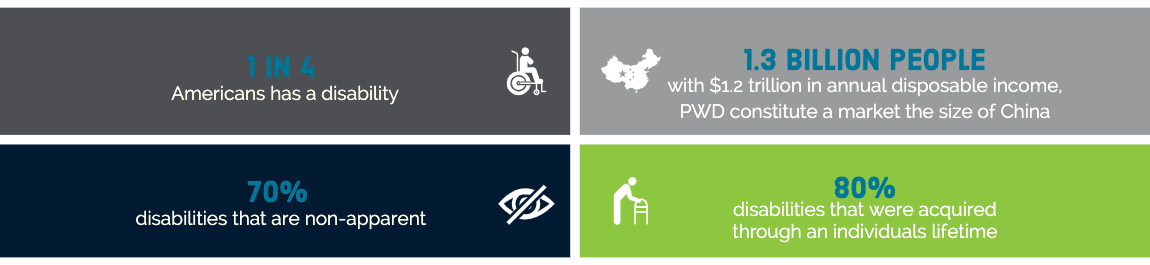
Has anyone ever disclosed their disability to their employer? My disability is non-apparent, I often want to keep this private, as I don't want anyone to think that I can handle less than someone who is "normal". (I understand this is ableist thinking against myself and not good for the greater cause.)
What are some of your experiences with this? Was it a positive or negative one?
Did you know that 2/5 adults are #caregivers? Today's working caregivers are looking to their employers for support, guidance and assistance. One way employers can provide support is to make sure certain company benefits like flexible/alternative work schedules are communicated proactively to all employees.
Knowing about this option can save the person anxiety and worry in asking for an alternate work schedule if they need to care for a family member. It can also relieve pressure in feeling like they need to disclose being a caregiver if they're not ready to share that.
How else have you seen your company, or companies in general, support caregivers?
October is National Disability Employment Awareness Month, also known as NDEAM! NDEAM celebrates the contributions of workers with disabilities and educates about the value of a workforce inclusive of their skills and talents. Join us throughout October in celebrating a diverse workforce made up of people with all different abilities!
This is a place for caregivers and people with disabilities to share their experiences and ask question about disability in the workplace.
A "disability" is defined by the ADA as, "something that substantially limits one or more major life activities." It is up to the individual to determine if this applies to him/her.
Examples include but are not limited to:
- Blindness
- Autism
- Bipolar disorder
- Post-traumatic stress disorder (PTSD)
- Deafness
- Cerebral palsy
- Major depression
- Obsessive compulsive disorder
- HIV/AIDS
- Cancer
- Multiple Sclerosis (MS)
- Diabetes
- Epilepsy
- Schizophrenia
- Anxiety
- Muscular dystrophy
- Intellectual disability
- ADHD






Terrie McWhorter
Join the conversationCongratulations!!! Just some advice...take time off and enjoy yourself, your family and life. My husband recently retired from civil service (after an active duty career)... Military members are used to routine. Hubby went a little crazy not having anything to do...then depression hit. So, we started a list of things that needed doing AND added some fun things in between. Have things to look forward to and to celebrate. Everyone says, oh I can't wait til I retire....but then it hits you, "what is my purpose in life now that I am retired" (AND still YOUNG!!!) He is very happy now, but there truly were a few bumps in the road adjusting. I wish you the best of luck!
2 likes